A new study by IIT Kharagpur researchers, published in Nature Communications, reveals that urban growth patterns significantly influence future cooling demand in cities. The research highlights that a city's "thermal memory," shaped by decades of development decisions, impacts its heat burden and energy requirements, independent of global temperature rises. The study analysed 88 Indian cities and a global sample of 52 cities over two decades.
Indian researchers from ICMR-National Institute for Research on Women's Health and IIT Bombay have developed an indigenous "placenta-on-chip" platform. This microphysiological system mimics the human placental barrier, reproducing essential functions like hormone production and nutrient transfer. It offers a simple, scalable tool for studying placental biology, pregnancy complications, and drug effects, aiming to reduce reliance on animal experimentation.

The Delhi government's Women and Child Development Department (WCD) has introduced a new internship and research framework, offering students in social work, psychology, and related fields structured field exposure at child care institutions and welfare centres.

Researchers at IIT Madras have patented a chemical-free antibacterial surface that physically eliminates harmful bacteria, including "superbugs," without relying on antibiotics or disinfectants. This innovative technology uses specially engineered nanostructures to rupture bacterial cell walls, offering a sustainable solution to Antimicrobial Resistance (AMR) for biomedical and public health applications.

Researchers at the Indian Institute of Science (IISc) in Bengaluru have discovered that oral cancer cells are vulnerable to low-frequency ultrasound, a technique that can selectively destroy them while leaving healthy cells unharmed. This vulnerability is linked to reduced levels of the mechanosensory protein Tropomyosin 2.1. The study suggests ultrasound mechanostimulation could offer a safer, more targeted treatment for oral and other accessible cancers.

'We're doing a lot of work around work-integrated learning, providing students with every opportunity to take at least part of their education as a practical work-based experience.'

Following devastating flash floods in Nepal, experts are calling for systematic scientific assessments of glaciers to understand and mitigate hazards, alongside the development of a robust land use policy for the Himalayan region. The floods, which killed over 460 people and left thousands missing, are believed to be linked to climate change impacts on glaciers and permafrost.

India and China are in what experts call 'a cooperation-versus-competition situation'.
Researchers at BRIC-RGCB in Thiruvananthapuram have developed a novel nanopore-based sensing technology. This innovation allows for the early and highly sensitive detection of biomarkers associated with neurodegenerative diseases like Parkinson's and ALS, addressing a critical challenge in current diagnostic methods. The technology, published in Nature Nanotechnology, uses self-assembling dual-diameter nanopore sensors to identify disease-specific biomarkers even at low concentrations.

The National Council of Educational Research and Training has reconstituted the Textbook Development Team for class 11 and 12 political science with a mandate to integrate cultural rootedness, Indian knowledge systems and inclusion, with at least four of the members having direct or indirect links with the RSS.

Researchers at Delhi's Indraprastha Institute of Information Technology have developed 'MutAIverse', a generative AI platform designed to decode DNA damage and identify potential causes of cancer. Tested on head and neck cancer patients in Guwahati, the platform successfully traced exposure to smokeless tobacco as a contributing factor. This innovation aims to shift focus from just diagnosis to understanding causative factors, potentially aiding in prevention and protection.

A new study has identified two distinct subtypes of autism, one with increased communication associated with immune-related systems and another with reduced connectivity linked to synaptic pathways. The findings, published in Nature Neuroscience, pave the way for more precise and personalised autism care and support.

Researchers at IIT-Guwahati have developed an inexpensive and efficient catalyst for producing hydrogen from water, a crucial step for the National Green Hydrogen Mission and the transition to sustainable energy. The catalyst uses nickel salt and an anthracene-based organic molecule, offering a cleaner alternative to fossil fuel-derived hydrogen.
A new study by King's College London and QIMR Berghofer Medical Research Institute has identified 74 genomic locations, including 39 new ones, linked to anxiety symptoms. Analysing data from nearly 700,000 people, the research highlights the complex interplay between genetics and environmental factors in anxiety development and offers new insights into its biological underpinnings.

Sikkim has identified 40 high-hazard glacial lakes, with 16 at the highest risk of catastrophic outbursts. Following a devastating GLOF in 2023, the state is developing India's first dedicated GLOF Risk Mitigation Protocol, using advanced monitoring and interdisciplinary approaches to protect downstream settlements and serve as a model for other Himalayan regions.

Researchers at IIT Bombay have developed a novel, low-cost, and highly durable catalyst using cobalt, nickel, phosphate, and graphite. This breakthrough material can accelerate both hydrogen and oxygen generation from water, significantly reducing the production cost of green hydrogen by eliminating the need for expensive noble metals like platinum and iridium.

Churches across the Mumbai Metropolitan Region have started asking worshippers to fill self-declaration forms, affirming they are attending prayers voluntarily. This move comes after Maharashtra's new anti-conversion law, the Maharashtra Freedom of Religion Act, 2026, came into force, leading to concerns among the Christian community about potential harassment and false accusations.

Scientists are examining how a possible glacial collapse and ice-rock avalanche may have triggered the devastating flash floods along Nepal's Bhote Koshi River, with preliminary assessments indicating that debris may have temporarily blocked the Lhende River and created a landslide dam that subsequently gave way.

'... to see that young people are gainfully employed. After that, it will become very difficult as we will start ageing much more rapidly.' 'We have a huge proportion of Gen Z. After 2030, every year, we will start seeing a gradual shift towards a slightly older society.'
The Sports Authority of India (SAI) has signed a Memorandum of Understanding (MoU) with Japan's University of Tsukuba to facilitate specialised training and exchange programmes for Indian athletes, coaches, and sports scientists. This partnership aims to enhance cooperation in various sports-related fields and boost India's international competitiveness, especially in disciplines like athletics, archery, table tennis, swimming, and judo.

High fees do not automatically translate into better teaching or stronger clinical exposure, points out Nayagam PP, career counsellor and founder of EduJob360.

'The trigger for the flood was definitely natural, but the damage that it caused was human-made.'
Researchers at IIT Indore have developed a non-invasive technique to detect early signs of oral cancer using saliva and a swab sample. This method is economical, quick, and aims to make early screening more accessible, especially in rural areas, offering an alternative to painful biopsies. The findings, published in the British Journal of Cancer, show distinctive molecular changes before the disease becomes clinically obvious.
Researchers from IIT Bhubaneswar and Virginia Commonwealth University have theoretically predicted a new two-dimensional material, a FeCl3 monolayer, exhibiting i-wave altermagnetism. This discovery holds significant potential for developing faster, more compact, and energy-efficient electronic devices, including applications in high-density memory, spintronics, and quantum technologies.
Researchers at IIT Kanpur are studying alpha waves in the brain to understand how stress affects cognitive functions. The study aims to build automated models of stress dimensions using EEG and correlating them with factors like loss of control, helplessness, and anxiety.
Researchers have successfully demonstrated the transmission of quantum information over commercial fibre-optic infrastructure, a significant step towards building practical quantum networks. This breakthrough addresses the challenge of cost and maintaining fragile entangled states outside laboratory settings.

'The valley is around 16 km from the Nepal border, and it took just 8-10 minutes for the ice and rocks to reach the Nepal border. You can imagine how fast it must have travelled!'

'There is no college that can guarantee a Rs 14 lakh per annum (LPA) package,' clarifies rediffGURU Chocko Valliappa.
New research using zebrafish suggests that changes in gene activity can lead to the hardening of spinal discs, a major cause of neck and back pain. The study identified potential drug targets, including existing osteoporosis medication and pathways related to fat and phosphate metabolism, offering new avenues for treating intervertebral disc degeneration (IVDD) beyond surgery.

The US push for clearer crypto rules is putting pressure on India to fill its own regulatory gap for virtual digital assets.

Girls at a government-run residential school in Lucknow staged a protest, the second in four days, demanding more teachers and better class conduct. The demonstration disrupted traffic, leading to official intervention and ongoing discussions with students regarding their grievances, which include a lack of science teachers despite approaching board exams.
Researchers at IIT (ISM) Dhanbad have developed an ultra-compact wearable antenna, measuring just 5x5x0.75 mm, designed to significantly enhance the performance of future healthcare devices, smart wearables, and wireless body communication systems. This innovation offers high-speed data transmission, wider wireless coverage, and a low Specific Absorption Rate (SAR), making it safe and efficient for prolonged use in Wireless Body Area Networks (WBANs).

Bar Council of India (BCI) Chairman Manan Kumar Mishra has issued an apology to law students, particularly those from NALSAR, for any hurt caused by the recent controversy surrounding their convocation and enrolment, urging them to make independent decisions.

Experts from the International Centre for Integrated Mountain Development (ICIMOD) suggest that an ice-rock avalanche originating in a high-altitude area likely triggered the devastating flash floods that swept across central Nepal districts, killing at least 95 people and leaving nearly 500 missing.
A new study reveals that neuron networks in the brain's hippocampus, the memory centre, become sparser but more structured and refined as animals mature.

The Union health ministry has deployed a National Joint Outbreak Response Team (NJORT) to Gujarat and Rajasthan to strengthen the response to the ongoing Chandipura Virus Disease (CHPV) outbreak.

Abhijeet Dipke, convenor of the Cockroach Janta Party (CJP), has initiated the 'School Thik Karo' campaign from his native village in Hingoli, Maharashtra, to address the alleged neglect of government schools and advocate for a fee cap on private educational institutions.

'Hydro-seismicity is a phenomenon that typically shows up during and just after the monsoon.' 'Heavy rain causes water to percolate deep into the rock, and where there are fractures, that water fills the pores and builds up what we call pore water pressure.' 'That pressure can widen existing cracks, and eventually the rock gives way -- which surfaces as tremors.'

Members of the Reserve Bank of India's (RBI) Monetary Policy Committee (MPC) have indicated that interest rate hikes may be necessary sooner rather than later, as headline inflation is projected to rise from its current benign levels in the coming months, according to the minutes of the August review.
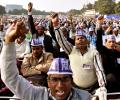
The Centre has informed the Supreme Court that the 'creamy layer' principle, which excludes affluent individuals from reservation benefits, does not apply to Scheduled Castes (SCs) and Scheduled Tribes (STs). This stance opposes Public Interest Litigations (PILs) seeking to implement such a principle for SC/ST reservations and to direct the government to formulate policies for more equitable distribution of reservation benefits.
